How Often Should Emergency Lights Be Tested?
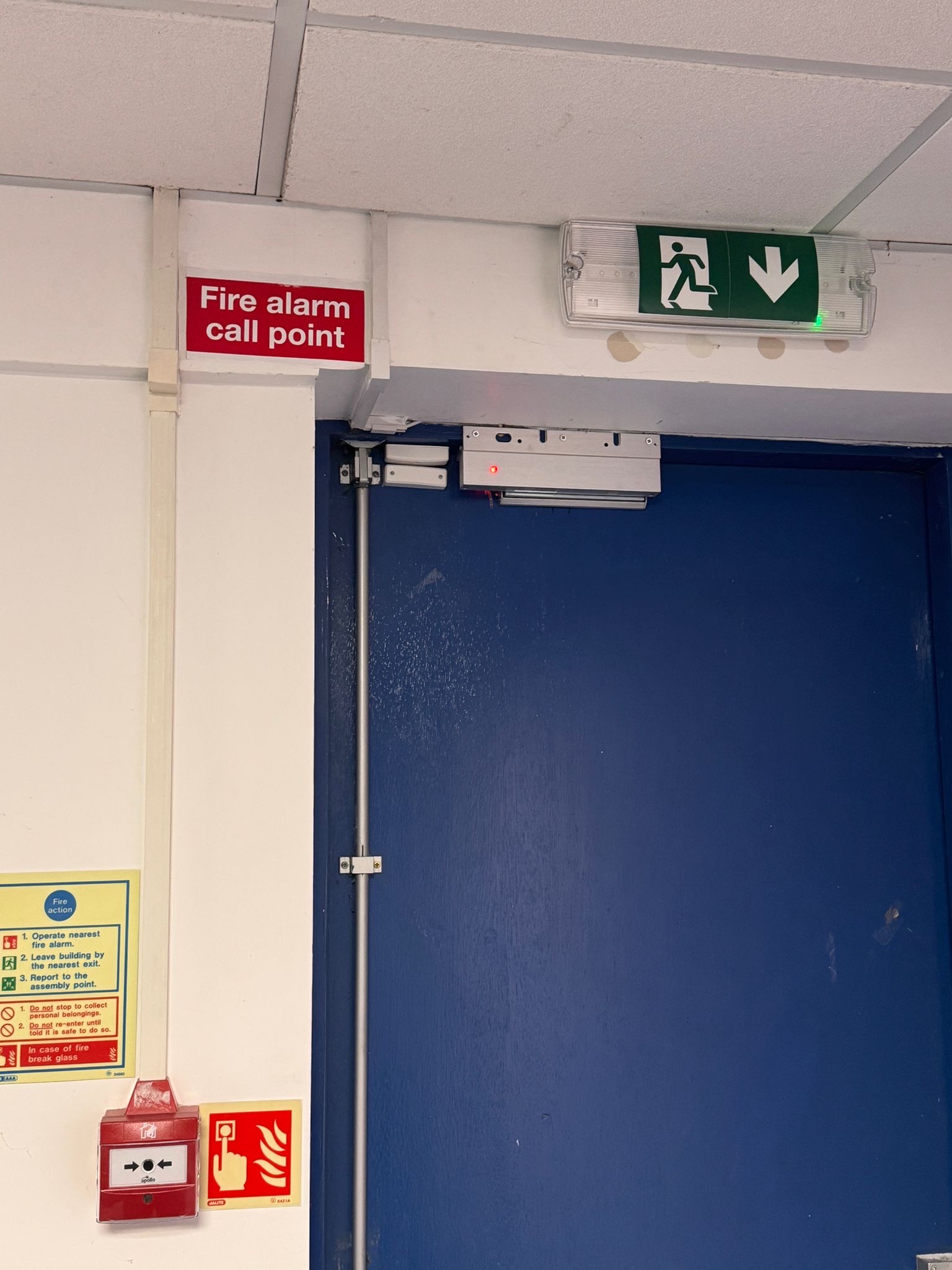
Emergency lighting is a critical part of any building’s fire safety strategy. In the event of a power failure, fire, or other emergency, emergency lights illuminate escape routes, stairwells, corridors and exit signs to help occupants leave the building safely. Without properly maintained emergency lighting, people may struggle to find exits, increasing the risk of injury or worse during an evacuation.
For business owners, facilities managers and landlords, understanding how often emergency lights should be tested is essential for maintaining compliance and protecting building occupants.
At Absolut Security Solutions, we install, inspect and maintain emergency lighting systems for commercial, industrial and residential buildings across the UK.
What Is Emergency Lighting?
Emergency lighting is battery-backed lighting that automatically operates when mains power fails.
It is designed to:
- Illuminate escape routes
- Highlight fire exits
- Reduce panic during evacuations
- Enable safe movement to assembly points
- Provide sufficient lighting for fire-fighting equipment and manual call points
Typical emergency lighting components include:
- Emergency bulkhead fittings
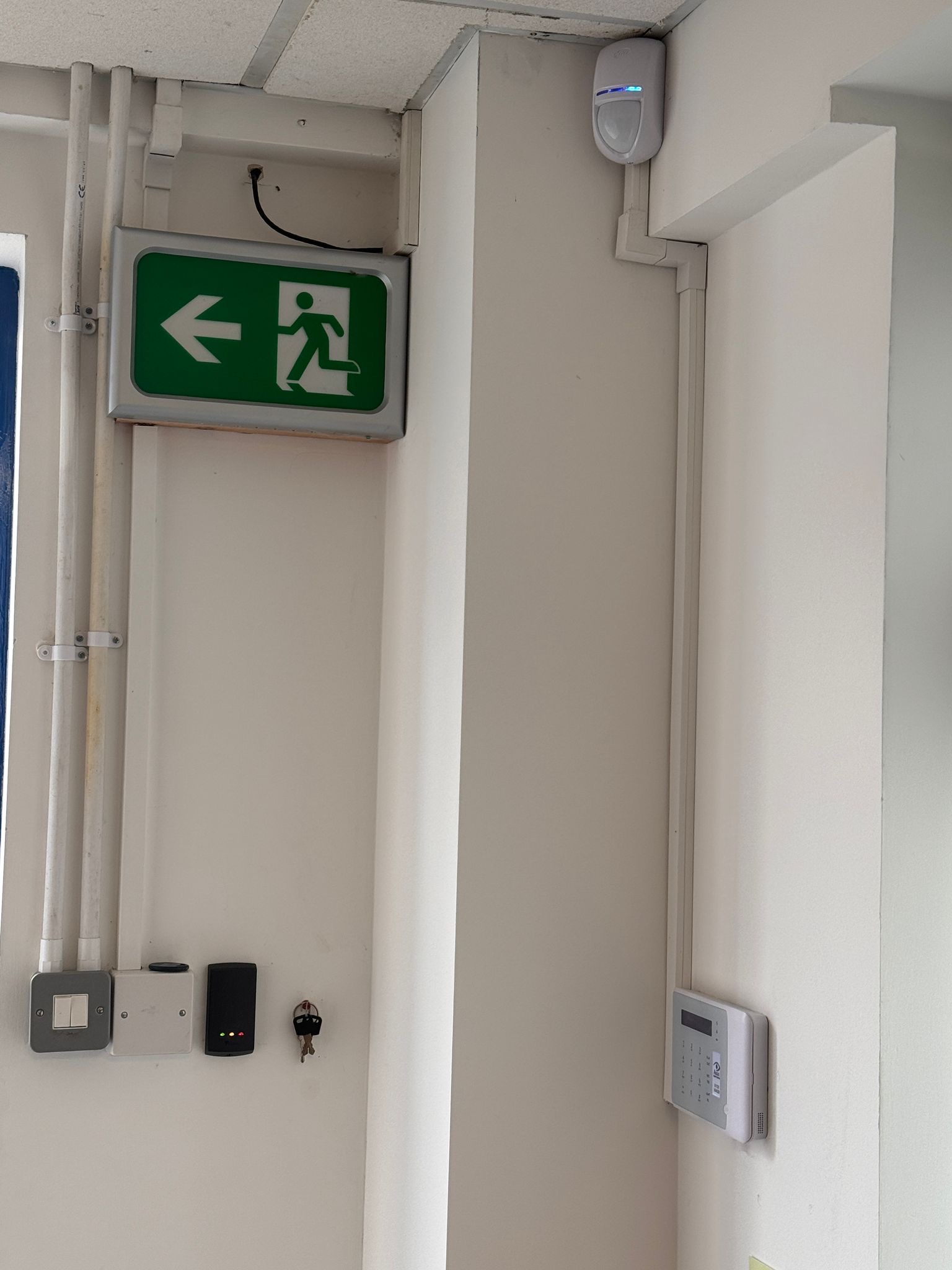
- Exit signs
- Twin spot units
- Conversion kits in standard light fittings
- Central battery systems
These systems are commonly installed in:
- Offices
- Warehouses
- Factories
- Schools
- Hotels
- Apartment blocks
- Retail stores
- Healthcare facilities
How Often Should Emergency Lighting Be Tested?
Monthly Functional Test
A short functional test should be carried out once every month.
During this test:
- Simulate a mains power failure
- Confirm all emergency lights illuminate
- Check exit signs are visible
- Record the results
This test is typically brief, lasting just long enough to confirm the fittings operate.
Annual Full Duration Test
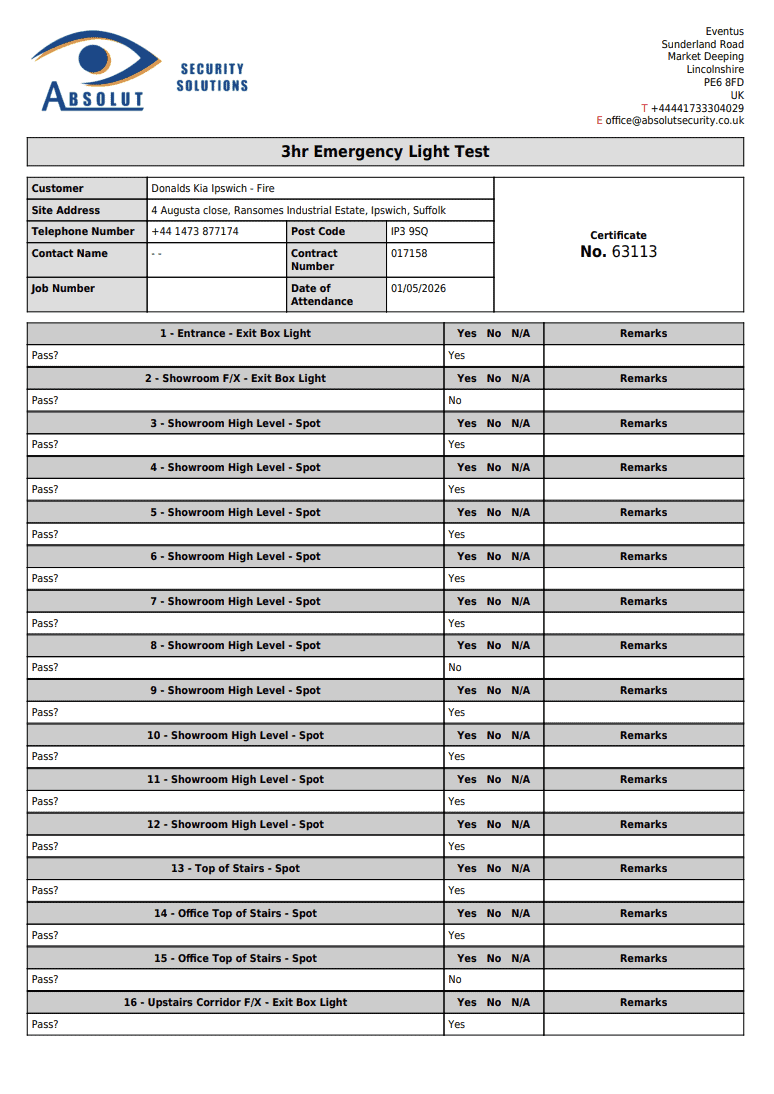
Once every 12 months, a full rated-duration test must be completed.
For most systems, this means:
- Running emergency lights for three hours
- Confirming all fittings remain illuminated throughout
- Inspecting batteries and charging systems
- Recording defects and remedial works
Any fittings that fail to operate for the full duration must be repaired or replaced.
What Should Be Recorded?
All emergency lighting tests should be documented in a fire safety logbook.
Records should include:
- Date of test
- Type of test carried out
- Name of person performing the test
- Results and observations
- Faults identified
- Corrective actions taken
Accurate records are essential if you are inspected by the fire authority, insurers or auditors.
Common Emergency Lighting Faults
During routine inspections, engineers frequently identify:
- Failed batteries
- Non-functioning luminaires
- Damaged exit signs
- Poor light output
- Charging faults
- Obsolete fittings
- Inadequate coverage after layout changes
Ignoring these issues can compromise safe evacuation.
Who Is Qualified to Carry Out Testing?
Monthly functional checks can often be performed by trained on-site staff.
However, annual duration tests and remedial work are best carried out by competent professionals who understand the relevant standards and can provide formal reports.
Using a specialist contractor ensures:
- Accurate testing
- Reliable fault diagnosis
- Proper documentation
- Compliance with legislation
What Happens During a Professional Inspection?
When Absolut Security Solutions carries out emergency lighting maintenance, our engineers will:
- Test each fitting
- Inspect batteries and charging circuits
- Verify signage and light coverage
- Identify non-compliant equipment
- Provide detailed reports
- Recommend and complete remedial works where required
We can also coordinate testing with fire alarm servicing, extinguisher maintenance and other statutory inspections.
Why Planned Preventative Maintenance Matters
Waiting until emergency lights fail can result in:
- Unsafe escape routes
- Failed fire audits
- Insurance complications
- Costly emergency repairs
A planned preventative maintenance (PPM) contract ensures your systems are tested on schedule and any defects are addressed promptly.
Which Buildings Need Emergency Lighting?
Emergency lighting is required in many non-domestic and multi-occupancy residential buildings, including:
- Offices
- Warehouses
- Factories
- Schools
- Hotels
- Care homes
- Blocks of flats
- Shops and supermarkets
If occupants may need assistance finding exits during a power failure, emergency lighting is likely required.
Frequently Asked Questions
Can I test emergency lights myself?
Monthly checks can be completed by trained staff, but annual testing should be undertaken by a competent professional.
How long should the annual test last?
Most systems are rated for three hours, although some systems may differ.
What happens if a fitting fails?
The faulty fitting or battery should be repaired or replaced as soon as possible.
Are records mandatory?
Yes. Documented evidence of testing is an important part of demonstrating compliance.